Jump to: California Scene · American Scene
California Scene
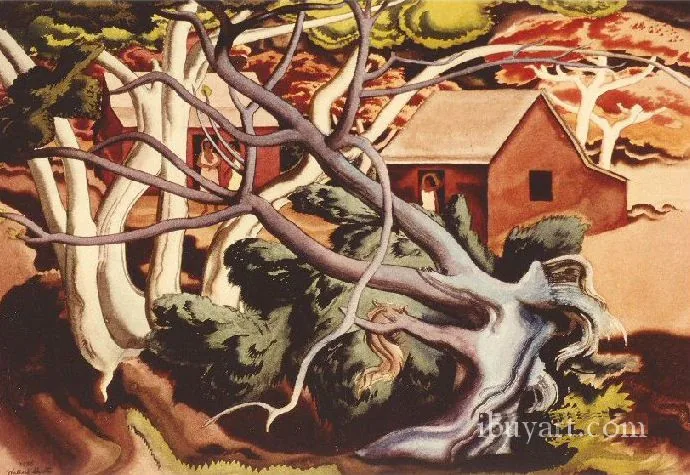
California Scene painting was the West Coast branch of the American Scene movement. The Los Angeles critic Arthur Millier is credited with the name. It described oils, watercolors and murals of recognizable California places and ordinary life: mountain and coastal scenery, agricultural valleys, small towns, freeways, ports and busy city streets.
The movement flourished from the 1920s to the 1960s, through the Great Depression, World War II and the post-war building boom. Where earlier plein air painters had often looked for unspoiled landscape, California Scene painters were just as interested in people at work and the changing face of the state. Many of the paintings carry a sense of story — a street scene, a working harbor, a family outing — which links the movement to narrative art.
Most California Scene paintings were done in watercolor, and the movement overlaps closely with California Style watercolor. New Deal art programs of the 1930s also gave many of these artists mural and easel commissions.
Painters associated with California Scene work include Millard Sheets, Emil Kosa Jr., Milford Zornes, Rex Brandt, Phil Paradise, George Post, Barse Miller, Paul Sample, Dong Kingman, Charles Payzant and Roger Kuntz, along with Phil Dike. Painters such as Ben Messick and James Patrick, who taught watercolor painting of local city scenes, worked with similar subjects.
American Scene
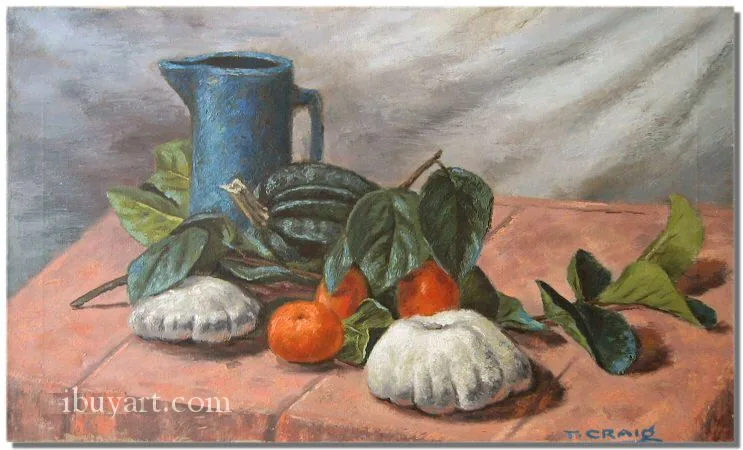
American Scene painting is an umbrella term for the realist art of the 1920s through the 1940s that took ordinary American life as its subject. It includes Regionalism, with its farms and small towns, as well as urban realism and the socially minded painting of the Depression years. Many painters linked to the movement, such as Edward Hopper and Charles Burchfield, never called themselves Regionalists but shared the same interest in American places and people.
The movement was strengthened by New Deal art programs. The Federal Art Project (1935–1943), part of the Works Progress Administration, employed thousands of artists to paint murals, easel paintings and posters for public buildings across the country.
World War II gave American Scene painters a new subject. Several artists on this site served as combat artists or war artists, recording military life at home and overseas, among them Ed Reep, Barse Miller, Ken Potter, Tom Craig, Arthur Beaumont, Milford Zornes and Standish Backus Jr..
Artists on this site associated with American Scene painting include Nat Levy, Paul Sample, Millard Sheets, Barse Miller, George Post and Tom Craig. The California Scene page describes the movement’s West Coast branch.
Selling a California or American Scene painting?
I am an avid collector of early and vintage paintings by California and American artists, and I buy California or American Scene paintings outright — single works, whole collections and estates. If you have an original oil or watercolor in this style, send me a few photos and I’ll give you a free art evaluation. I offer immediate payment, with no waiting for consignments to sell or auctions to end.
Original paintings only — no prints, lithographs or serigraphs please. See also the full list of artists I buy.