Jump to: California Post Impressionism · American Post Impressionism
California Post Impressionism
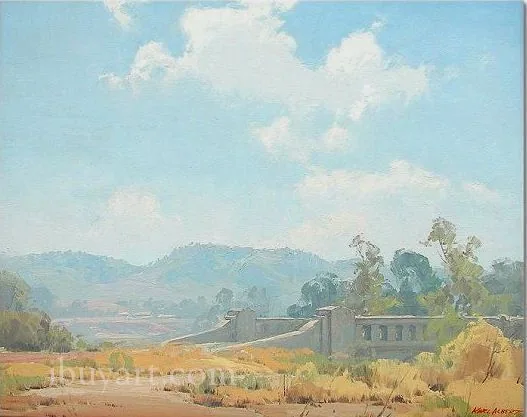
In France, Post-Impressionism followed Impressionism in the 1880s and 1890s, as artists such as Paul Cézanne, Vincent van Gogh and Paul Gauguin moved beyond recording light toward stronger structure, expressive color and decorative design. These ideas reached American audiences in force with the 1913 Armory Show in New York and, in California, with the 1915 Panama-Pacific International Exposition in San Francisco.
Some California painters responded by brightening their palettes, flattening space and simplifying shapes. In Oakland, a group known as the Society of Six — Selden Gile, William Clapp, August Gay, Maurice Logan, Louis Siegriest and Bernard von Eichman — painted outdoors together in the 1910s and 1920s in a vivid, loosely brushed style that was more adventurous than most of their Bay Area peers. In Southern California, a number of plein air painters loosened their brushwork and heightened their color in a similar spirit.
California Post Impressionist paintings are often small, quickly painted landscapes with thick paint and saturated color, though the term also covers more structured, design-led works.
On this site, Anna Althea Hills is described as a California Post Impressionist. Related work can be found among the California Impressionists, such as Franz Bischoff and Paul Lauritz.
American Post Impressionism
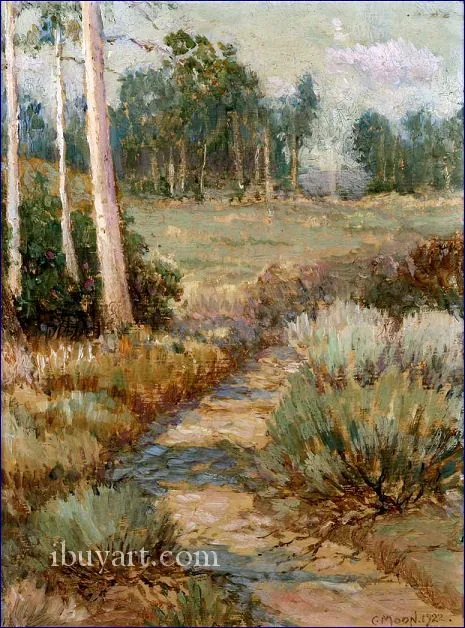
Post-Impressionism is a broad term for the painters who followed the French Impressionists. Instead of recording passing light, artists such as Paul Cézanne, Vincent van Gogh, Paul Gauguin and Georges Seurat emphasized structure, pattern and expressive color.
Many Americans first saw this work at the 1913 Armory Show in New York, the first large exhibition of modern art in the United States. The show traveled to Chicago and Boston and sparked years of debate. Over the next two decades, a generation of American painters absorbed Post-Impressionist ideas and combined them with American subjects — landscapes, towns, harbors and the people who lived there.
In practice, American Post Impressionist paintings range from boldly colored, loosely brushed landscapes to carefully composed, simplified scenes that point toward the American Scene painting of the 1930s. In California, the 1915 Panama-Pacific International Exposition played a similar role to the Armory Show and inspired groups such as Oakland’s Society of Six.
On this site, see Anna Althea Hills and the California Post Impressionism page for the California side of the story. Many California Style watercolorists, including Millard Sheets and Rex Brandt, also drew on Post-Impressionist ideas of structure and color.
Selling a Post-Impressionism painting?
I am an avid collector of early and vintage paintings by California and American artists, and I buy Post-Impressionism paintings outright — single works, whole collections and estates. If you have an original oil or watercolor in this style, send me a few photos and I’ll give you a free art evaluation. I offer immediate payment, with no waiting for consignments to sell or auctions to end.
Original paintings only — no prints, lithographs or serigraphs please. See also the full list of artists I buy.